
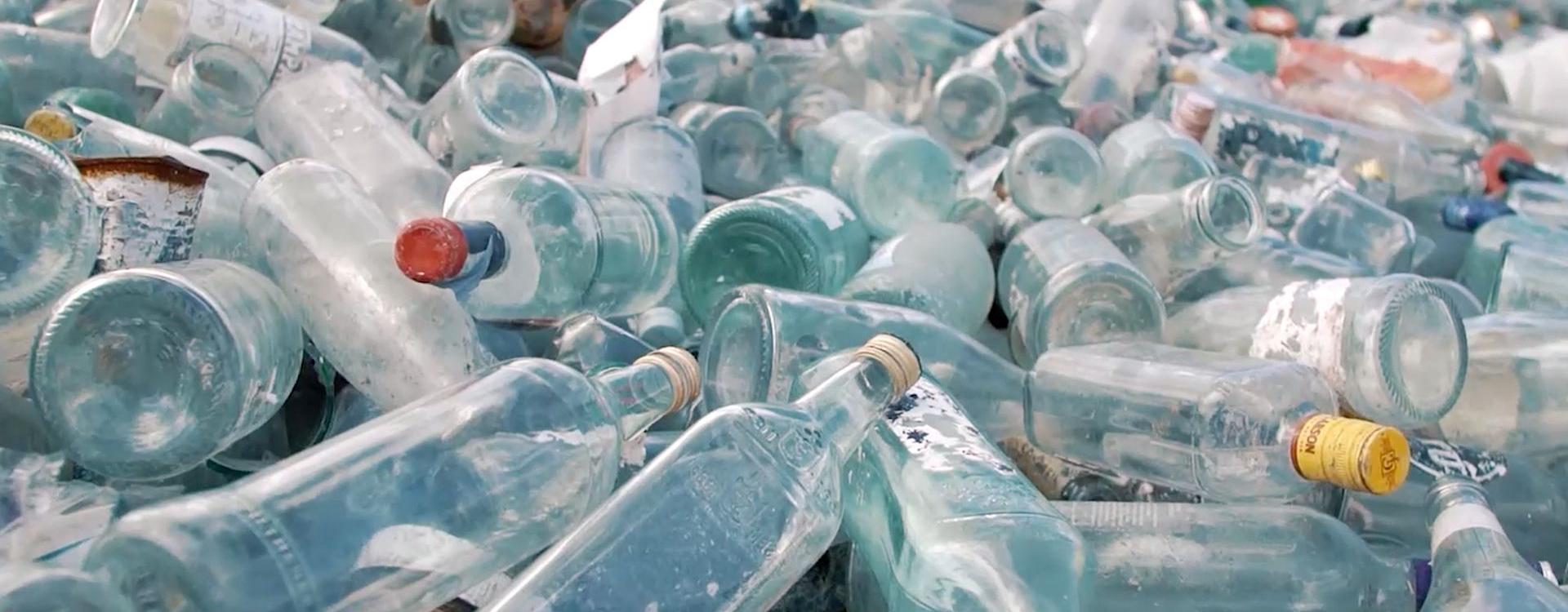
Glass container recycling using efficient processing technology
"Close cycles with us! For the highest level of environmental protection and sustainability!"
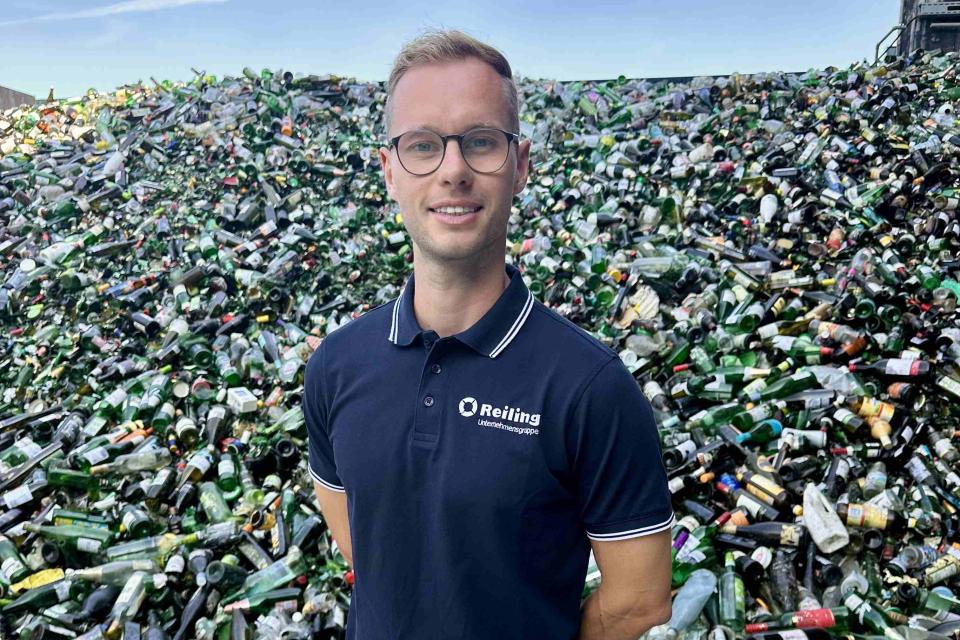
Philipp Loddenkemper
Customer service glass
Recycling our constant companion
Did you know that every year, every citizen in Germany produces an average of more than 20 kilograms of waste from single-use glass?
We are aware of our responsibility and are committed to sustainability and environmental protection! Because only the responsible use of resources will secure the future for coming generations. And container glass in particular is a recyclable material that can be returned to the economic cycle indefinitely – because old shards are turned into new glass. The primary raw materials used in glass production, such as sand, soda and lime, are considered to be virtually unlimited – but their extraction, transport and processing require a great deal of energy and generate high CO2 emissions. Using 10% of our recycled shards in glass production means a saving of 3% in energy and 5% in CO2.
Contact us quickly and easily using our inquiry form and receive a non-binding offer.
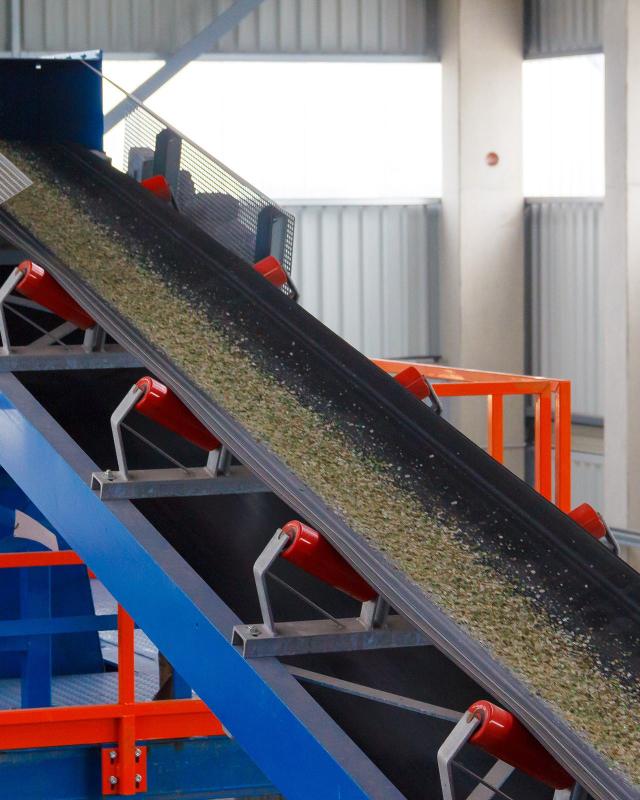
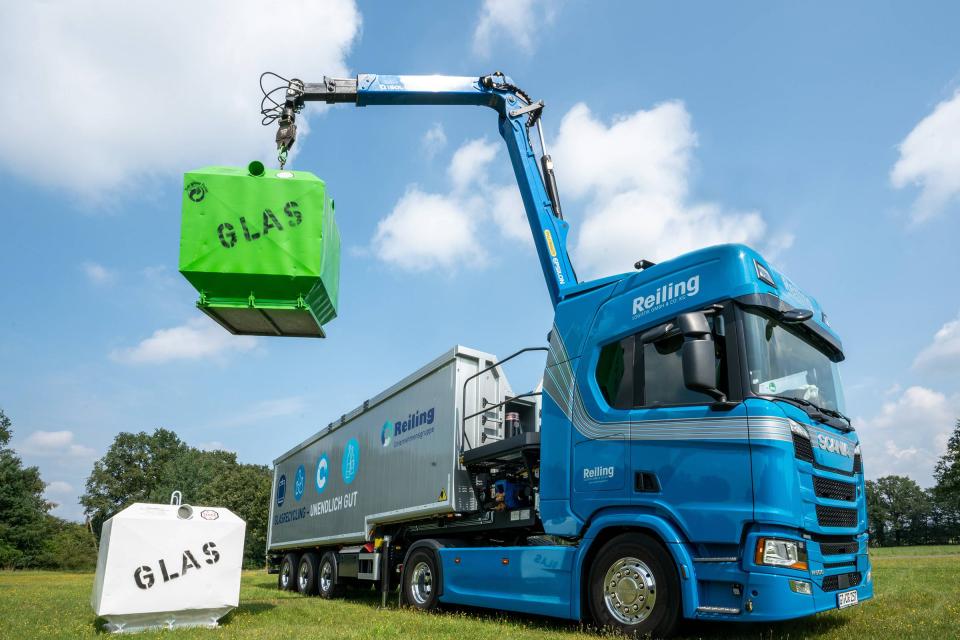
Container glass recycling – efficiency with the highest quality
We are one of the market leaders in the field of glass recycling across Europe. We offer the glass manufacturing industry best cullet quality. This is, after all, the only way to ensure highest possible recyclability in the glass melt. Years ago, we developed one of today’s most advanced methods (X-ray fluorescence analysis) for separation of impurities in cooperation with US researchers. It has become indispensable in international cullet processing. We are constantly working to incorporate new findings and research results into our technical processing procedures. This enables us to achieve the best possible result in terms of purity, fines content and colour grading. Every year, more than 1 million tons of cullet can be returned to the material cycle by recycling container and flat glass by type.
Demand-driven collection options
We are there wherever you need us as a partner of dual systems, municipalities, industry, and commerce! In addition to container placement, we ensure regular collection or just-in-time pick-ups. Of course, we also guarantee complete documentation of the recycled glass quantities. Our staff will be happy to advise you, on individual glass detection options at your site as well.
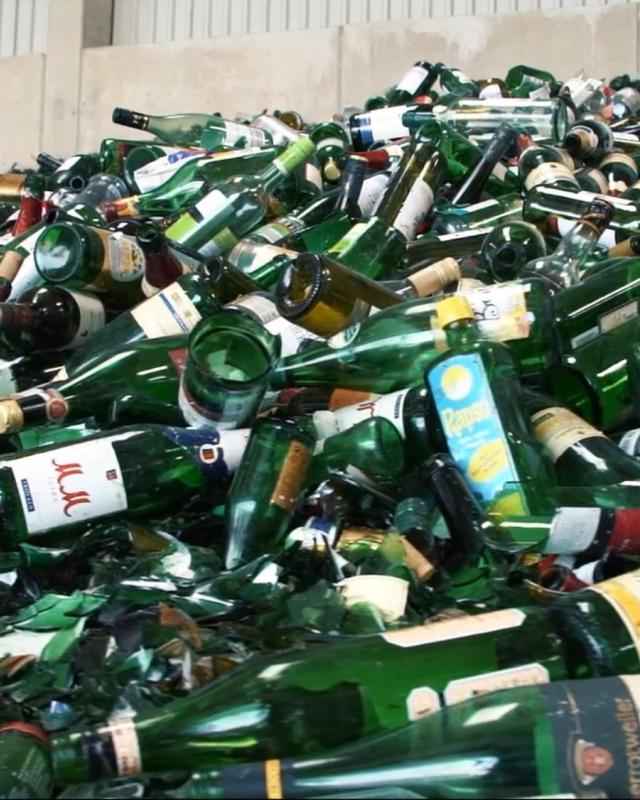
Your demand – Our promise
We can produce clean recyclates free of impurities from the collected waste glass; it will be perfectly prepared for reuse in melting applications. In light of the individual specifications of glassworks and the glass processing industry, our products will be clean of CSP, FE, and non-ferrous metals as well as glass ceramics, lead-containing glasses, and organic substances after treatment.
Custom grain sizes to match your needs can be provided in addition to the guaranteed purity. We will happily take care of the entire logistics process for you in that area as well, to ensure on-time delivery and supply. We place the greatest importance on a cooperative business relationship. Therefore, not only our competent office and field staff but our entire quality management team will be available to you on site as a contact.
Click here for our glass recycling brochure.
FAQ container glass recycling
True to the motto: Your questions – our answers! We answer frequently asked questions about glass disposal at our glass recycling plants in Germany and Europe.
Glass recycling is important because it conserves resources, saves energy and protects the environment. Recycling glass allows raw materials to be reused, which reduces environmental impact and makes glass production more sustainable.
The prerequisite for efficient glass recycling is the collection of waste glass sorted by type and, ideally, by colour. At our glass recycling sites, the collected waste glass is mechanically recycled using specialised sorting technology. Our processing plants sort out non-glass materials such as labels (organic), ferrous and non-ferrous metals (e.g. lids) as well as glass ceramics and KSP (ceramics, stones, porcelain).
The recycled glass cullet is melted down during glass production to make new glass. With optimal collection, 100% reuse can be achieved.
Yes! Recycled glass shards are used to make new glass products, such as bottles and other glass containers. This requires proper collection and efficient recycling. Glass is a recyclable material that can be recycled 100%.
Used glass should be disposed of in the designated glass containers, sorted by type and colour (e.g. white, green, brown). It is sufficient to dispose of the glass jars empty (no need to rinse them out!). Lids can remain on.
Only glass containers such as bottles and preserving jars may be placed in the glass recycling container. Under no circumstances should porcelain and ceramics, drinking glasses, lead crystal glasses or heat-resistant glass (e.g. ovenware) be disposed of in the glass container. These belong in the residual waste.
As a rule, all types of bottle and container glass as well as flat glass can be recycled as long as there is no significant contamination with foreign materials such as ceramics, stones, porcelain or other non-glass materials.
If waste glass is not collected in the intended manner and becomes contaminated, this reduces the reuse rate depending on the degree of quality deterioration. In the event of serious contamination, this means that the glass can either only be processed for inferior applications or must be sent to landfill.
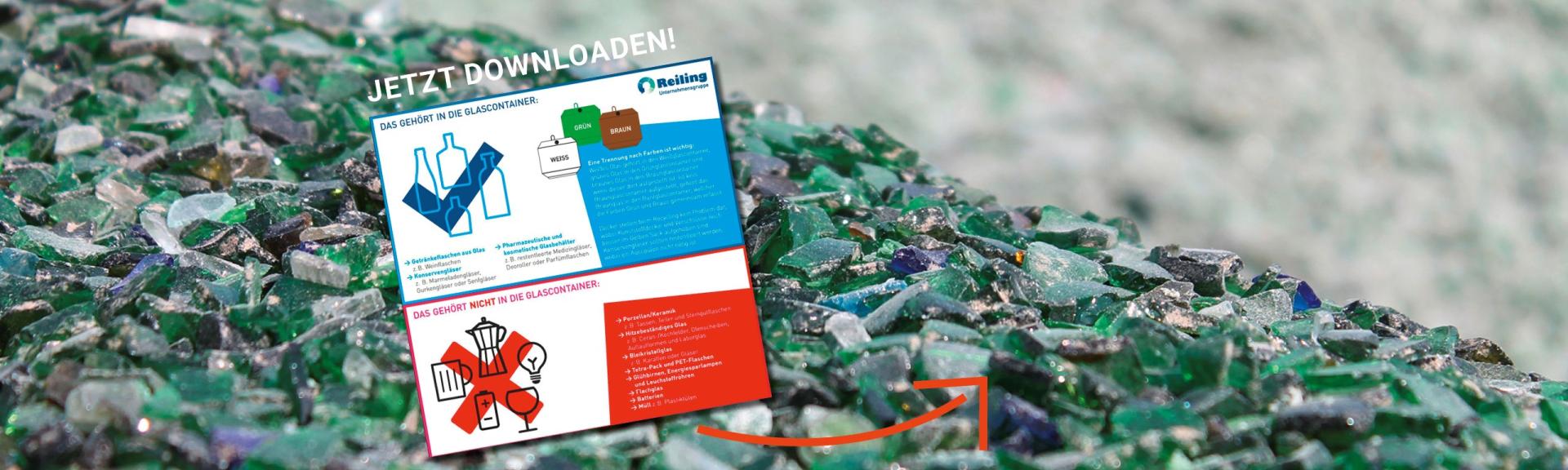
Proper collection makes the difference
Only proper sorting by type and colour generally guarantees efficient reprocessing results. The less contaminated the glass arrives at our plants – the more efficient will recycling be. This is how we close cycles! Download the infographic now!